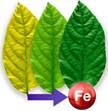
Normally, iron in forms like Ferrous salts such as Ferus Sulphate or Ferric Chloride given through given through the soil quickly reacts with calcium, phosphorus, or carbonates, especially in alkaline soils. Once this happens, plants cannot absorb it effectively, leading to nutrient deficiencies. The reactions or iron salts with phosphorus salts takes place as follows:
Equation 1: FeSO4 + H3PO4 → Fe(PO4)2 + H2SO4
Equation 2: 3FeSO4 + 2Na3PO4 → Fe3(PO4)2 + 3Na2SO4
Equation 3: FeCl3 (aq) + Na3PO4 (aq) → FePO4 (s) + 3NaCl (aq)
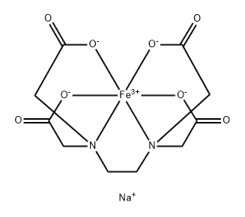
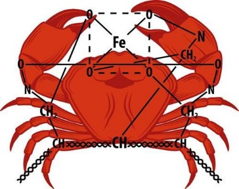
Such reactions happen in the high pH soil or whenever such salts are mixed together. Chelation solves this problem by keeping iron dissolved and readily available for uptake.
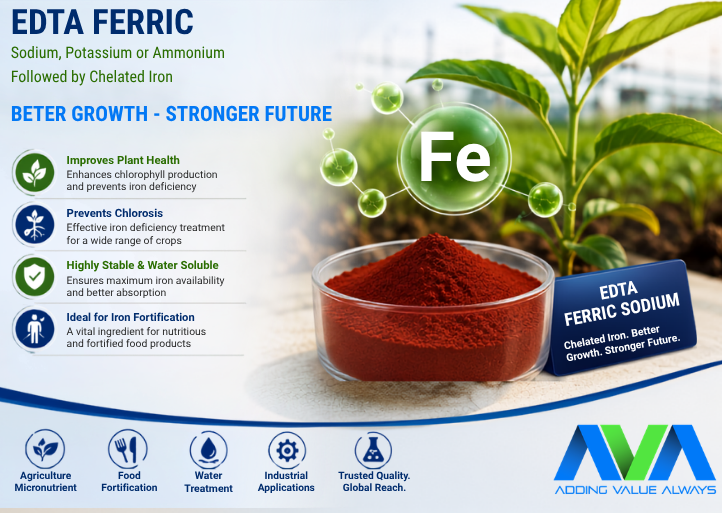
Some of the key characteristics of EDTA Ferric Sodium include:
High water solubility
Excellent chemical stability
Improved iron availability
Easy mixing with fertilizer formulations
Compatibility with various micronutrient blends
Because of these advantages, it is widely used as an iron chelate fertilizer, food fortification ingredient, and industrial chelating agent.
How Chelated Iron Improves Plant Health
Iron may be required only in small quantities, but its impact on plant growth is enormous.
Iron plays an important role in:
Chlorophyll production Photosynthesis Nitrogen metabolism
| Energy transfer Enzyme activation Healthy root development
|
Although iron is naturally present in many soils, plants often cannot absorb enough of it because the mineral becomes chemically locked.
This is where Iron EDTA proves valuable.
Unlike conventional iron salts, chelated iron remains available even after irrigation or fertilizer application. Plants absorb the nutrient more efficiently through both soil application and foliar spraying.
The result is:
| Faster vegetative growth Increased crop yield Improved produce quality
|
For farmers aiming to maximize productivity, an effective iron chelate fertilizer is often one of the simplest ways to correct iron deficiency.
Preventing Chlorosis with Fe EDTA
One of the most common symptoms of iron deficiency is chlorosis.
Interveinal chlorosis appears when leaves begin turning yellow while the veins remain green. Since iron is essential for chlorophyll formation, insufficient iron directly affects the plant's ability to produce food through photosynthesis.
The symptoms in plants:
o Green veins: The veins on the leaf stay dark green while the tissue between them turns yellow.
o New growth first: The yellowing appears on the newest, youngest leaves at the top of the plant because iron cannot move easily from old leaves to new ones.
o Severe damage: Leaves can turn completely white or pale, develop brown dead spots (necrosis), and drop off early
Iron deficiency is particularly common in:
Calcareous soils High pH soils, pH ³ 7.0
| Sandy soils Poorly drained soils
|
Sensitive crops include:
Citrus fruits Grapes Pomegranate Soybean
| Groundnut Vegetables Cotton Ornamental crops
|
Using Fe EDTA provides plants with immediately available iron, helping reverse chlorosis before it significantly affects growth.
Regular application offers several benefits:
For growers facing recurring iron deficiency, chelated iron is a long-term, reliable solution.
Ferric Sodium EDTA in Food Fortification
The importance of EDTA Ferric extends far beyond agriculture.
Iron deficiency remains one of the most common nutritional problems worldwide, contributing to fatigue, reduced cognitive development, and iron deficiency anaemia. To address this, food manufacturers increasingly use Ferric Sodium (or Potassium or Ammonium) EDTA as an iron fortification ingredient.
One of its major advantages is its high bioavailability. Compared to many traditional iron salts, the iron in Ferric Sodium EDTA is more easily absorbed by the body, even in foods containing compounds that typically inhibit iron absorption, such as phytates found in cereals and legumes.
Common fortified products include:
Wheat flour Breakfast cereals Nutritional supplements
| |
Its stability during food processing also helps maintain product quality without significantly affecting taste, color, or shelf life, making it a preferred choice for food manufacturers and public health initiatives.
Choosing a Reliable Ferric EDTA Manufacturer
The performance of any chelated micronutrient depends heavily on its manufacturing quality. Variations in purity, chelation efficiency, and quality control can directly impact product performance in agricultural, food, and industrial applications.
When selecting a Ferric EDTA manufacturer or chelated iron supplier, consider the following:
Consistent product quality
High purity standards
Reliable technical support
Highest shelf life, at least ONE year
Strong manufacturing capabilities
Compliance with relevant industry standards
Efficient packaging and global export capabilities
Experience in EDTA chemistry and micronutrient production
Working with an experienced EDTA chemicals manufacturer ensures consistent product performance and dependable supply for both domestic and international markets.
Why Choose AVA Chemicals?
At AVA Chemicals, we specialize in manufacturing high-quality EDTA-based chelates for agriculture, food, pharmaceutical, and industrial applications. Our EDTA Ferric salts such as Disodium Fe-EDTA, Dipotassium Fe-EDTA or Ammonium Fe-EDTA are produced under stringent quality control to ensure excellent stability, purity, and performance.
As an established manufacturer and exporter, we are committed to providing solutions that meet the evolving needs of customers worldwide.
Our strengths include:
Advanced manufacturing facilities
Strict quality assurance processes
Consistent product performance
Reliable global supply
Technical expertise in chelating agents
Customized packaging options
Customer-focused service and support
Whether you're developing micronutrient fertilizers, fortified food products, or industrial formulations, AVA Chemicals delivers dependable EDTA solutions backed by years of manufacturing expertise.
Conclusion
As industries continue to focus on efficiency, sustainability, and performance, EDTA Ferric Sodium (or Potassium or Ammonium) have become an essential ingredient across multiple sectors. From correcting iron deficiency in crops and preventing chlorosis to improving iron nutrition in fortified foods and supporting industrial applications, its versatility makes it a valuable solution.
For businesses seeking a trusted source of high-quality Ferric EDTA, partnering with an experienced manufacturer ensures consistent quality, technical support, and reliable supply.
With decades of expertise in chelating chemistry, AVA Chemicals continues to provide premium EDTA products that help customers achieve better agricultural productivity, improved nutritional outcomes, and enhanced industrial performance.